
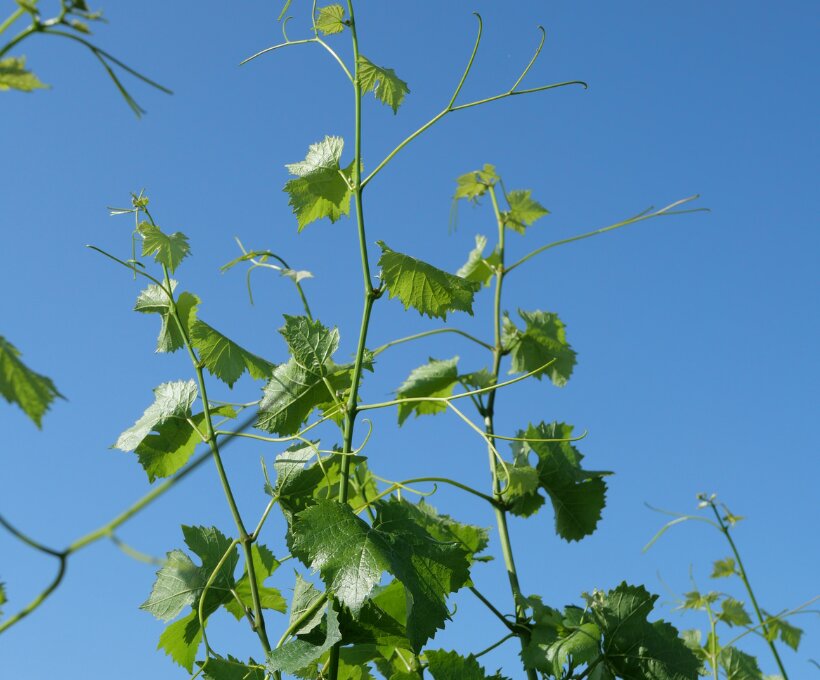
The drone : For many years, Domaine Schlumberger has been fighting to obtain the use of drones in hillside vineyards, as our German, Swiss and Austrian neighbors do… Trials were carried out in 2021 and the finding is simple: the chaser projects the product upwards and produces a cloud while the drone flattens the product downwards and reduces the drift effect. The drone makes it possible to reduce fuel consumption, limit soil compaction and reduce employee exposure to products. It is perfectly adapted to organic cultivation. To date, we are still awaiting administrative decisions for its use!
Felt covers: The estate is trialing felt ground covers, an agroecological alternative to under-row weeding. Developed by Thorenap Vigne from French hemp and recycled jute fiber, these mulches are made without glue, binders, or water, and biodegrade within 3 years. They also protect the soil from erosion and UV exposure, reduce vine water stress, and limit temperature fluctuations.
Sound as protection: For several years, the estate has been trialing genodics in its vineyard. Developed in the 1980s by Joël Sternheimer, this science uses sound to stimulate the vine’s proteins, strengthening its resistance to disease (esca, downy mildew, flavescence dorée) and to climate variability. An autonomous device, with a range of 10 to 15 hectares, broadcasts these frequencies across the vines, with no inputs required.
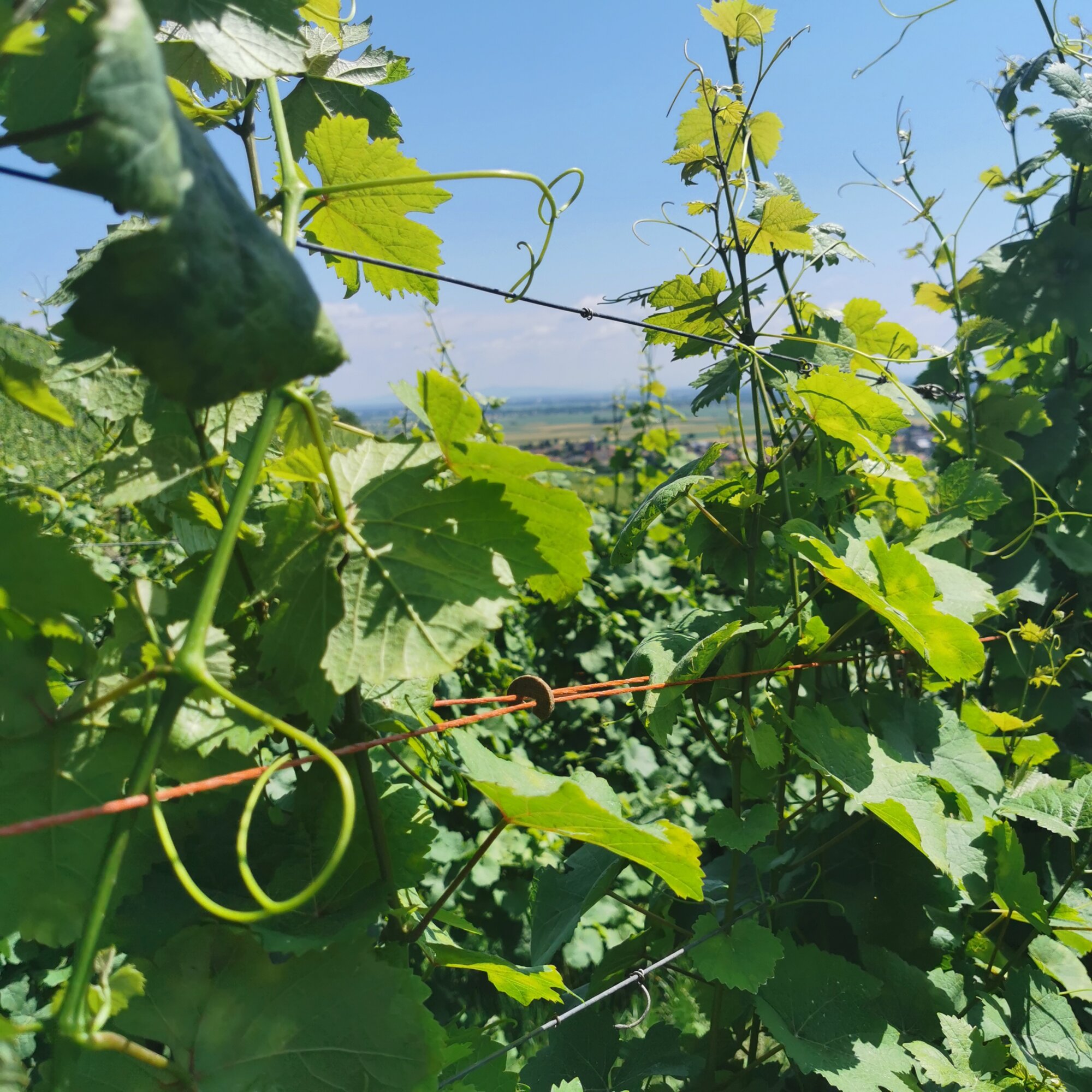
Bio-based mulching: Since 2025, we’ve been trialing a bio-based cover sheet as an alternative to under-row weeding, monitored by the Alsace Chamber of Agriculture across several hectares. Early results are promising for soil moisture retention and vine vigor.
Compost teas: Five of our staff have been trained in preparing and applying compost teas and lacto-fermented biofertilizers, which balance the soil’s microbial life and help the vine adapt better to climate change.
Direct seeding: Across nearly 20 hectares, a mix of legumes and cereals is sown directly between the rows, reducing our need for fertilizer and naturally enriching the soil.
Physiological pruning: On a test plot, we’re trialing a pruning method that respects the vine’s natural sap flow, with encouraging results for drought resistance.
Draft horse: On the historic Clos parcel, we continue to use a draft horse for soil work, a practice that avoids any use of herbicide.
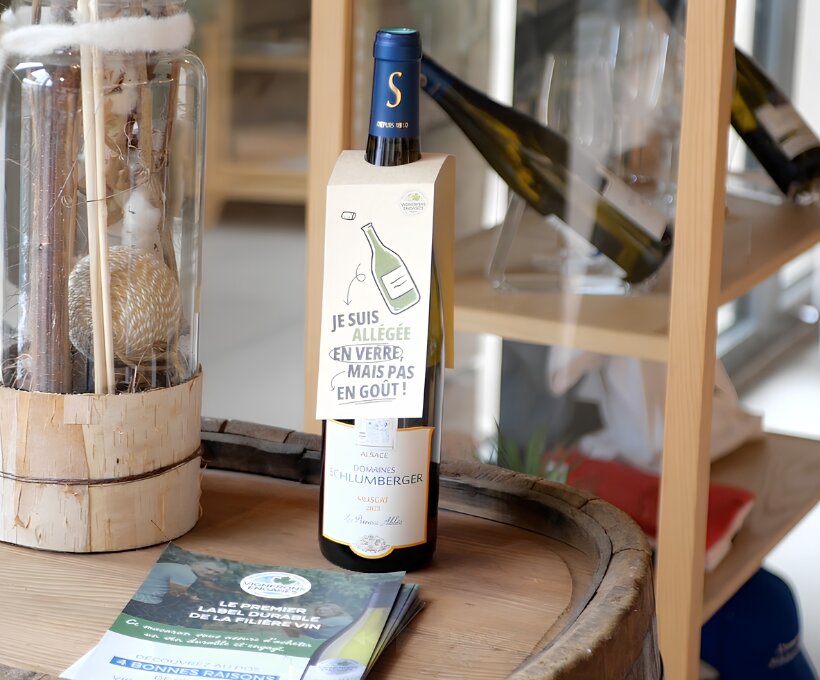
Éco-design
In order to manage its waste treatment, the estate has signed an agreement with the town to sort waste, bring the fuel station and drinking water well up to standard, and recycle the label widths and pallets, which are 100% reused!
For many years now, the choice of bottle has been a light (440g, compared with the average 700g), brown bottle (which uses 70% recycled glass). Each bottle also features a 100% recyclable, plastic-free e-cap.
While storage is an important issue for winegrowers, we store around 800,000 bottles in a non-air-conditioned underground cellar. This is thanks to an ideal ambient temperature due to the presence of a stream of water in the cellar, which enables it to cool down. Finally, we carry out the labelling on site to take account of the requirements of customers in each country and to limit the waste of unused labels!