What this label measures
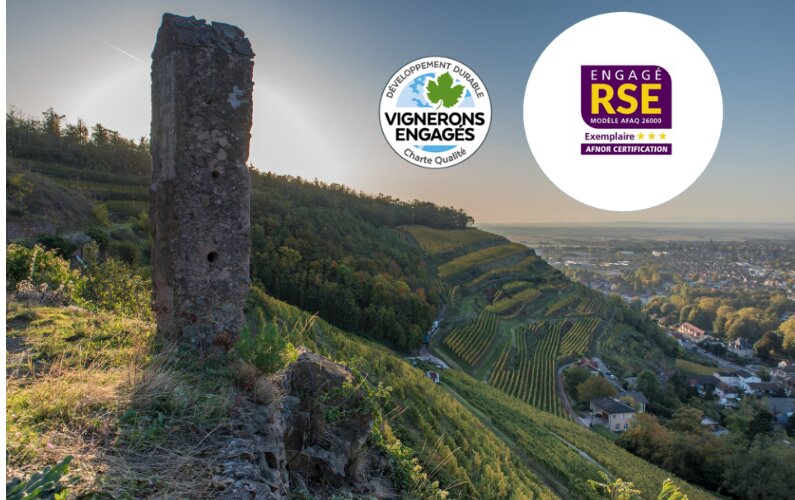
The Vignerons Engagés label is built on the international ISO 26000 standard and assesses the integration of social responsibility across eight major areas: governance, the integration of CSR into business processes, human resources, sustainable production practices, local community engagement, and environmental, social, and economic performance.
To reach this level, our estate had to demonstrate, among other things, that 100% of its vineyard surface had undergone the Vignerons Engagés diagnostic : a goal we’ve maintained since our first certification.
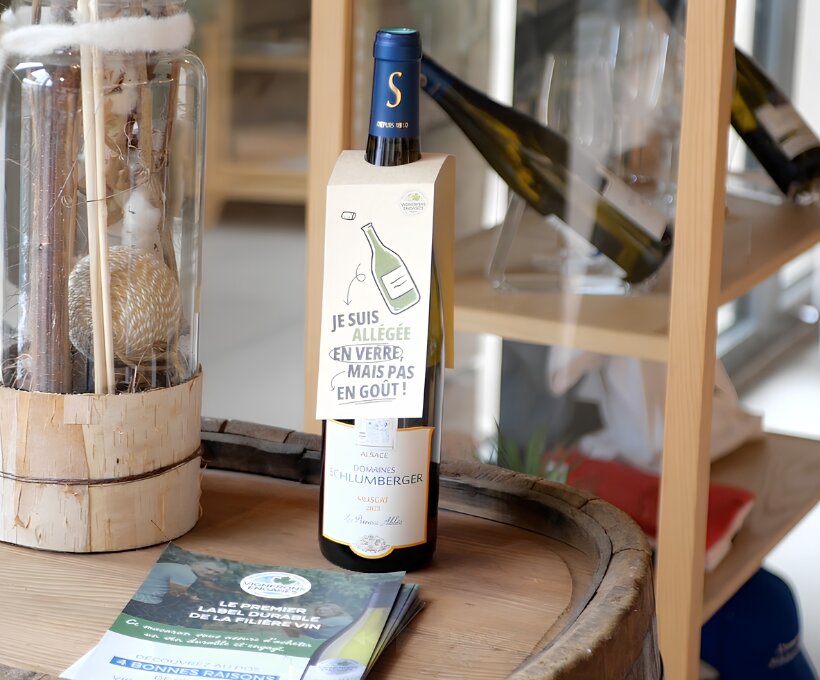
Our strengths, as identified by the assessors
Governance built with the whole team. Our CSR strategy was co-developed with management, process leads, and our works council (CSE), and is reviewed on a quarterly basis.
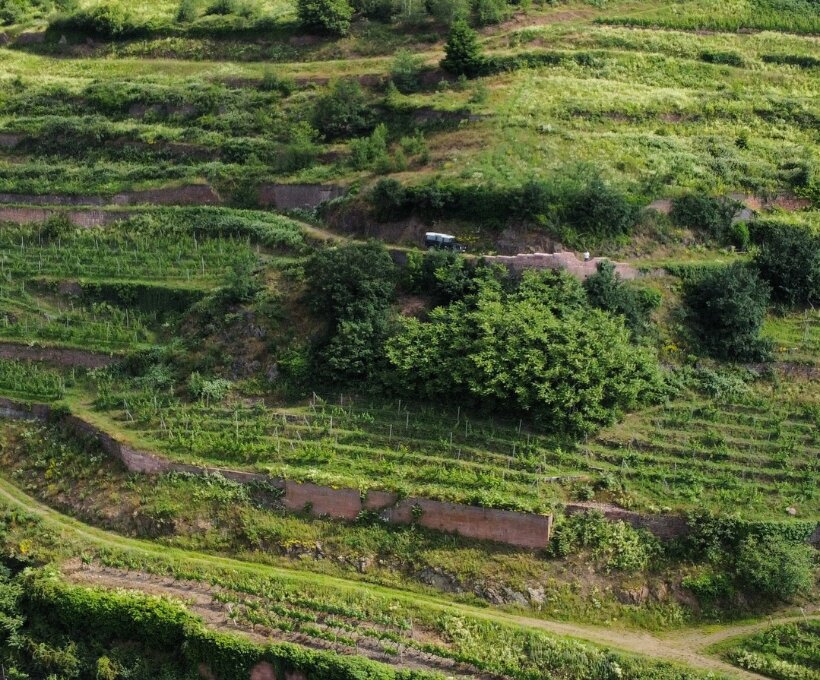
Winegrowing that never stops experimenting. Widespread use of sexual confusion techniques to cut down on insecticides, continued horse-plowing on the Clos parcel, legume cover crops to reduce fertilizer use, compost teas to boost soil microbial life, drone use to limit soil compaction, and physiological pruning to build the vine’s drought resilience: our teams are constantly testing, measuring, and adjusting.
Eco-design carried through to the bottle. 85% of our bottles are now lightweighted, returnable, or reused, compared to a 68.4% average among labeled estates. Our corks are 99.41% cork, and our paper and cardboard are 100% FSC-certified.
Circular economy in practice. 93% of our waste is recycled or recovered: winemaking waste is sent for methanization just 2 km from the estate, label backing paper is turned into insulation, and organic waste is converted into biogas.
Genuine roots in our local area. 83% of our purchases are made within 200 km, our 70 seasonal workers come from the local labor market, and we maintain strong partnerships with the Guebwiller tourist office, the local hospitality school, and area sports and cultural associations.
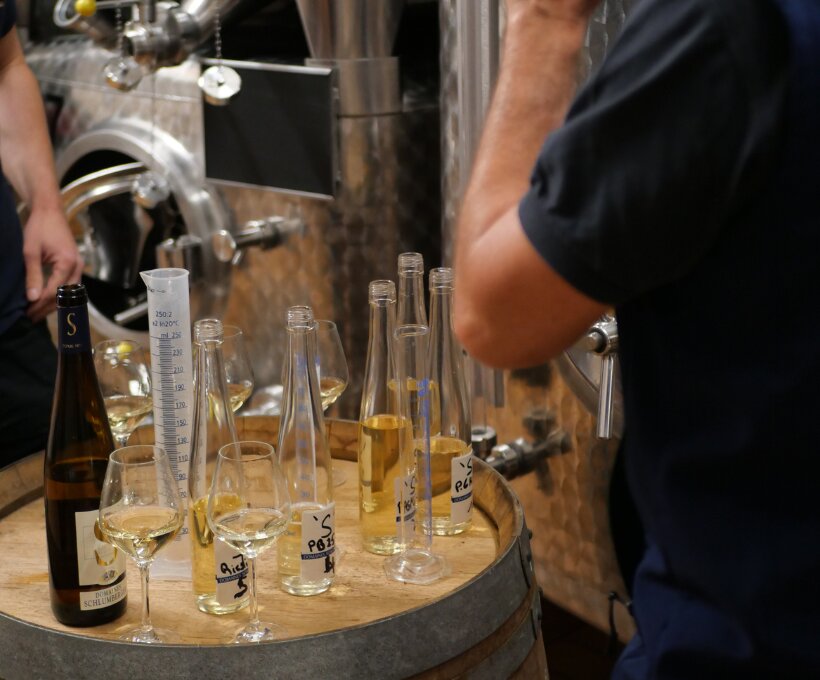
Where we’re headed over the next three years
The assessors also pointed us toward areas for improvement: tracking indicator performance more consistently over time, giving our sustainable marketing strategy clearer structure, strengthening our influence with suppliers and clients, and moving forward with our carbon assessment, currently underway — with a target of cutting greenhouse gas emissions by 50% by 2030 and reaching carbon neutrality by 2050.
A family conviction since 1810
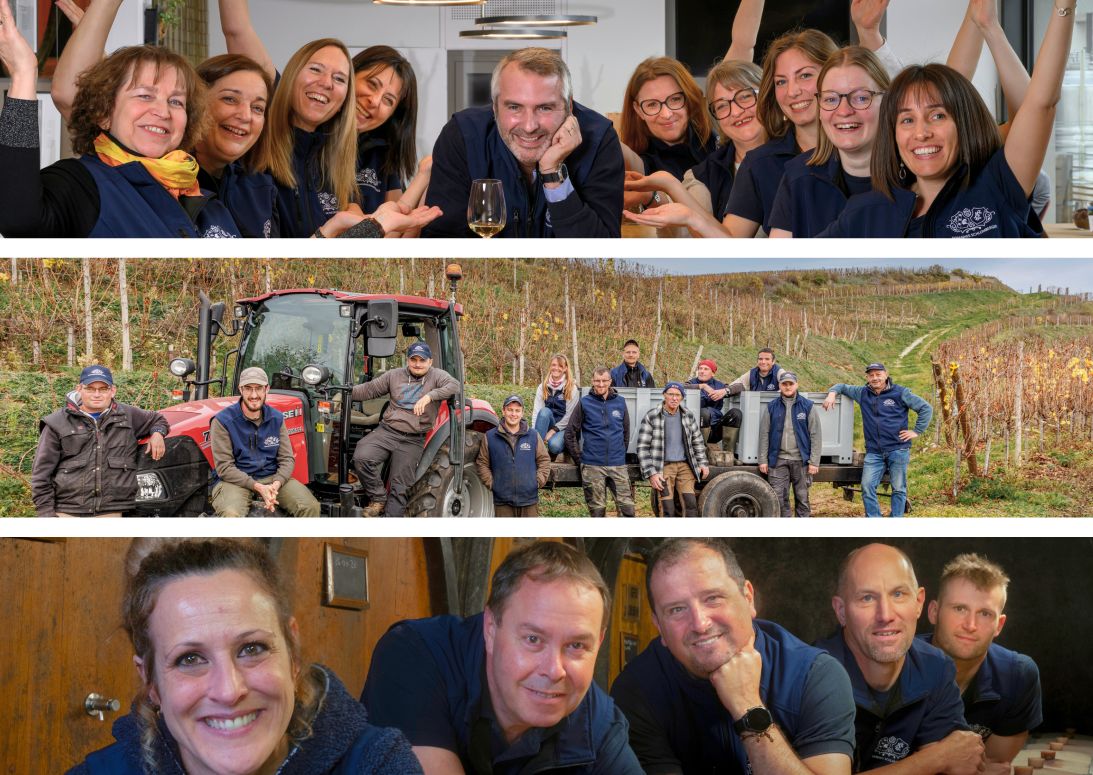
For seven generations, Domaines Schlumberger has held to a simple idea: a vineyard is only as good as what it leaves for the generations that follow. The Vignerons Engagés label and our Level 3 HVE certification, obtained back in 2019, are the most recent expression of that idea. But this sense of responsibility is best seen in our 130 hectares of vines, our 70 hectares of Grand Cru vineyards, and the daily work of our 36 employees.